mardi 22 mars 2011

The Art Of Titles

For the research on the art of the title website, I had to think about my priorities on goal of the title. I also had to get ideas of fonts and examples of specific fonts or intra-writing.

The Art Of the Title

3 Priorities for my approach of the openning scene

-The fun in our business is creating new things

-When dealing with openning sequence, you try to relax the audience
-You don’t have to over complicate things to start with

Ideas for Credits

For my credits, I can use, for example, these fonts :


-Bell Gothic Std Black


-Bernard MT Condensed


-Charlemagne StD


-Stencil Std


These credits can be put during shots or between different shots.

I can also put the credit directly in the movie (E.g. on a paper)

Examples of Fonts in movies poster

The “Never Let me go” poster is a very good example of a specific font in a movie poster.


Fight Club poster is a perfect example of an intra-writing in the image (writing not aded in the movie by computer but present directly in the image).


I also compared the writing of the posters from a movie and his remake : Clash Of The Titans.

This movie poster is a poster from the original film “Clash of The Titans” in 1981.


This movie poster is from the remake of the movie “Clash of The Titans” in 2010


The two writings are quite the same, except from the color (gold for the 1981 version and silver for the 2010 remake). The original poster has a writing that looks "older" and recalls mythology whereas the other one looks more simple.


The Title of my Movie

The aim of this research was to get a title for my movie and also to understand how to use credits, when to put them and what kind of font I can use. I am hesitating between these three titles :
-The Newcomer
-A New Life
-The Outsider

vendredi 18 mars 2011

Forrest Gump Opening Scene : How to use long shots

The exemple of the opening scene of Forrest Gump shows a good use of a long unique shot : cut based on a moving object (the plume) and Forrest Gump's Reaction to this discovery. This unique shot has one principal purpose : relax the spectators.
The music is also important in this process of relaxing the audition : in this special case, the music grows more as the plume approaches the protagonist (Forrest Gump). Alan Silvestri's song is getting more and more instruments in it to end as a real orchestra. This effect of the music getting intensity also helps the spectator getting in the movie easier.

The unique shot of 3 minutes is a very hard thing to do because of the fact that it has to be done perfectly or every has to be re-done.

The opening scene doesn't show a lot about the movie itself. The spectator has to think about what he sees and, for example, see a metaphor of a life in this long shot based on a feather.


This long cut inspired me for the fisrt part of my openning scene.

Saw 2 Opening : How to use short cuts

The Opening sequence of the movie Saw 2 (2005) demonstrates perfectly how tu use lot of short cuts in one sequence to make the movie more intensive.
The cuts insist on the protagonist :
-First, on his feelings about his situation
-Then, on his choice to deal with the trap or not and his hesitations.

 
/!\ Violent scene


jeudi 17 mars 2011

AS Media Opening Scene

This opening scene of a media studies project was shown by one of our teachers. I found it really interesting because, at the begining, I though that this sequence wasn't good at all, almost because it isn't filmed well. Then, when I saw the attack, I realised how important the filming is in this project : The filming add a more thrilling feeling about the situation of the students. The way in which it is filmed (from mobile phone as if we were looking through the eyes of each person) make the project even more realistic.
I think this media work was really challenging the conventions much by the fact that it was done with split screens but also because of the quality of the acting and the way in which every protagonist is filming.
To make it even more realistic, they chose to let the "dead" students films which creates a morbid atmosphere (the screens don't move anymore when shot down).


mardi 8 mars 2011

Camera shots part 2

These are informations I found in a very useful website : http://www.mediacollege.com/video/shots/


Extreme Wide Shot (EWS)


In the extreme wide shot, the view is so far from the subject that s/he isn't even visible. The point of this shot is to show the subject's surroundings.

The EWS is often used as an "establishing shot" - the first shot of a new scene, designed to show the audience where the action is taking place.

It is also useful in scenes where the action is very spread out. For example, in a war movie an extreme wide shot can show the scale of the action.

The EWS is also known as an extra long shot or extreme long shot (acronym XLS).


Very Wide Shot (VWS)


The very wide shot is much closer to the subject than an extreme wide shot, but still much further away than a wide shot. The subject is visible here but only just (in this case it's a boy leaning against the fence). The emphasis is very much on placing him in his environment.

This often works as an establishing shot, in which the audience is shown the whole setting so they can orient themselves.

The VWS also allows plenty of room for action to take place, or for multiple subjects to appear on screen.


Wide Shot (WS)


In the wide shot, the subject takes up the full frame. In this case, the boy's feet are almost at the bottom of frame and his head is almost at the top. Obviously the subject doesn't take up the whole width and height of the frame, since this is as close as we can get without losing any part of him. The small amount of room above and below the subject can be thought of as safety room — you don't want to be cutting the top of the head off. It would also look uncomfortable if his feet and head were exactly at the top and bottom of frame.

As with many shot types, the wide shot means different things to different people. However the wide shot seems to suffer more from varying interpretations than other types. Many people take the WS to mean something much wider than our example, i.e. what we would call a very wide shot.


Mid Shot (MS)


The mid shot shows some part of the subject in more detail, whilst still showing enough for the audience to feel as if they were looking at the whole subject. In fact, this is an approximation of how you would see a person "in the flesh" if you were having a casual conversation. You wouldn't be paying any attention to their lower body, so that part of the picture is unnecessary.

The MS is appropriate when the subject is speaking without too much emotion or intense concentration. It also works well when the intent is to deliver information, which is why it is frequently used by television news presenters. You will often see a story begin with a MS of the reporter (providing information), followed by closer shots of interview subjects (providing reactions and emotion).

As well as being a comfortable, emotionally neutral shot, the mid shot allows room for hand gestures and a bit of movement.


Medium Close Up (MCU)

The medium closeup is half way between a mid shot and a close up. This shot shows the face more clearly, without getting uncomfortably close.


lundi 7 mars 2011

Place

My opening scene is going to take place around St Edmunds College in many different places :
-Around the college
-In front of the main entrance
-In a room

Here is an aerial picture of the Saint Edmunds College

Film Company Logo

I didn't have any specific idea about my film company logo so I decided to simply put it directly in the opening sequence :

I decided to cqll my production's company "Ravenscence" after a discussion with Louis Watkins about orginal names of production companies.

vendredi 4 mars 2011

Camera Shots Part 1

These are informations I found in a very useful website : http://www.mediacollege.com/video/shots/


Cut-In (CI)

Like a cutaway, but specifically refers to showing some part of the subject in detail.

Can be used purely as an edit point, or to emphasise emotion etc. For example, hand movements can show enthusiasm, agitation, nervousness, etc.


Cutaway (CA)


A cutaway is a shot that's usually of something other than the current action. It could be a different subject (eg. this cat when the main subject is its owner), a close up of a different part of the subject (eg. the subject's hands), or just about anything else.

The cutaway is used as a "buffer" between shots (to help the editing process), or to add interest/information.


Weather Shot


In this type of shot the subject is the weather. The sky takes up at least 2/3 of the frame. This type of shot is common in television programs where the weather is of particular interest, e.g. sports shows.

Although the usual purpose of this shot is to show the weather, it is also useful as an establishing shot, for setting the general mood or for overlaying graphics.

A weather shot doesn't have to show the sky. Other shots often used to illustrate weather include:

• Puddles, drain spouts or any example of rainwater flow.

• Trees or anything else blowing in the wind.

• People sunbathing.

• Snowmen, snowball fights, snow sledding, etc.


Over the Shoulder Shot (OSS)


This shot is framed from behind a person who is looking at the subject. The person facing the subject should usually occupy about 1/3 of the frame.

This shot helps to establish the position of each person, and get the feel of looking at one person from the other's point of view.

It's common to cut between these shots during a conversation, alternating the view between the different speakers.

This shot can be varied quite a bit to include the shoulder or back of the person facing the subject.

mardi 1 mars 2011

Preliminary Task

The preliminary task has to contain one person walking in a room and sitting down in front of an other one. Then one of the character had to leave. The main task of this short scene was to train us to shot-reverse shot and also to respect the 180 degree rule (see post).

For this task, I was working with Will, Louis and Stan. We had to help each other by acting or filming for each one of us.

The process of filming started very well and I learnt how hard it is to be serious while filming. This means that it is really to not laugh during the scene and it can become a real problem when you have to do and re-do scenes over and over again. But we had many problems : first of all, because we had all the same memory card, we got a confuse between what part belongs to who. Then, after an other period of filming, we had an other problem and lost again an important part of the work. Finally, we filmed it all once again and started editing. We also had many problems with the cameras' batteries which were not always fully charged.
For the editing part of the preliminary task, I had an advantage because I knew already how to use IMovie which is quite similar to Corel VideoStudio 12.


I have learnt a lot about this preliminary task but the two most important things were :
-How important it is to plan carefully the filming (i.e.: by doing a storyboard to respect 180 degree rule, by charging the battery before we film ...)
-How important it is to pay attention to the memory card (i.e.: is it full ?)

lundi 28 février 2011

180 Degree Rule Video

Here is a video I found on internet about 180 degree rule. I found it much more easier to understand it with examples.

I also started watching the others videos of this channel (VideoMaker) and I found very interesting and useful videos. I might publish another of them videos if I find one very interesting.

180° Rule /!\ To not forget

The 180° rule is a basic guideline in film making that states that two characters (or other elements) in the same scene should always have the same left/right relationship to each other. If the camera passes over the imaginary axis connecting the two subjects, it is called crossing the line. It is usually considered as a newbie error. The new shot, from the opposite side, is known as a reverse angle.
The 180° is essential for the movie to respect continuity editing.


By breaking the 180° Rule, the spectator can be lost by being confuse between differents characters. This effect on the spectator is sometimes used by filmmaker like in The Lord of The rings during the "Smeagol/Gollum schizophrenic scene" :
http://www.youtube.com/watch?v=dCs9EnY5R8U&feature=related

vendredi 11 février 2011

Storyboard

A really important thing to do before filming the opening scene is the storyboard. A storyboard is a graphic organizer such as a series of illustrations or images displayed in sequence for the purpose of pre-visualizing a motion picture, animation, motion graphic or interactive media sequence, including website interactivity.

The storyboard helps to previsualise but also to know what you exactly want to do and how long it will be. Even if you are not a good drawer, storyboard is essential.

My storyboard will be fill in this sheet :


Here is an example of a typical storyboard :
 

mardi 8 février 2011

8 Films for inspiration

For this Project, I have to chose 6 to 8 movies of my genre : Drama.
I decided to chose 8 movies of different types of Drama like Comedy-Drama, War-Drama, Psychological-Drama or also Romantic-Drama.
My eight movies are the following ones :


-12 Angry Men (1957)


Genre: Drama, Classics
Synopsis: A dissenting juror in a murder trial slowly manages to convince the others that the case is not as obviously clear as it seemed in court.
Rated: Unrated
Running Time: 1 hr. 35 min.
In Theaters: Apr 13, 1957 Wide


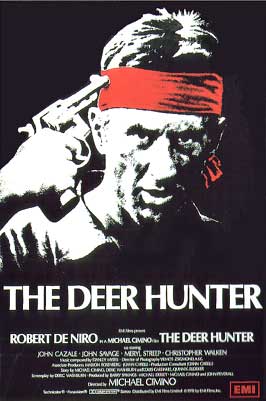
-The Deer Hunter (1978)


Genre: Drama, Cult Movies
Synopsis: An in-depth examination the lives of people in a smallindustrial town in the USA, their experience in the Vietnam War and their return.
Rated: R for violence and language
Running Time: 3 hr. 2 min


-Do the Right Thing (1989)

Genre: Drama, Comedy
Synopsis: On a sweltering hot day in a Brooklyn neighborhood, everyone has their own issues to deal with and tensions between Blacks and Italians rise. Issues of pride and prejudice, justice and inequity come to the surface as hate and bigotry smoulder. finally building into a crescendo as it explodes into violence.
Rated: R
Running Time: 2 hr.
Distributor:Universal Pictures
Directed By: Spike Lee
Written By: Spike Lee


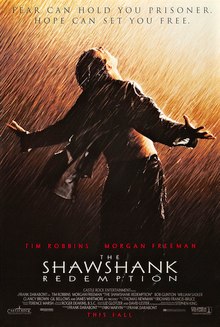
-The Shawshank Redemption (1994)
Genre: Drama
Synopsis: Andy Dufresne, a mild mannered New England banker, is convicted of murdering his wife and her lover. Despised at first by the other inmates because of his introverted manner, Andy slowly forges an unlikely friendship with Red, a seasoned lifer and his gang. Andy also becomes popular with the prison guards. Over a twenty year period, Andy is able to maintain his sanity and dignity in prison not by physical force but by mental force. His smarts and confidence keep him going and he is able to teach the other prisoners that hope is the ultimate means of survival.
Rated: R
Running Time: 2 hr. 22 min.
In Theaters: Aug 20, 1994 Wide


-Forrest Gump (1994)
Genre: Drama, Romance, Comedy
Synopsis: The story of a man who, over the course of three decades and despite having an IQ of only 75, leads a most extraordinary life by meeting famous persons or being part of the Vietnam War
Rated: PG-13 for drug content, some sensuality and war violence
Running Time: 2 hr. 22 min.
In Theaters: Oct 7, 1994 Wide


-Fight Club (1999)
Genre: Drama, Comedy
Synopsis: An office employee and a soap salesman build a global organization to help vent male aggression : the Fight Club.
Rated: R for disturbing and graphic depiction of violent anti-social behaviour, sexuality and language
Running Time: 2 hr. 20 min.
In Theaters: Nov 12, 1999 Wide

-Slumdog Millionaire (2008)
Genre: Drama, Romance

Synopsis: The story of how impoverished Indian teen Jamal Malik became a contestant on the Hindi version of "Who Wants to be A Millionaire?" an endeavor made without prize money in mind, rather, an effort to prove his love for his friend Latika, who is an ardent fan of the show.
Rated: R for some violence, disturbing images and language
Running Time: 2 hr.
In Theaters: Jan 9, 2009 Wide
US Box Office:£141.2M


-Never let me go (2010)

Genre: Drama, Mystery & Suspense, Science Fiction & Fantasy
Inspired by Kasuo Ishiguro’s book
Synopsis: An alternate history story of a woman who, as she reflects on her private school years in the English countryside, reunites with her two friends to face the dark secrets tied to their communal past.
Rated: R for some sexuality and nudity
Running Time: 1 hr. 44 min.
In Theaters: Feb 11, 2011 Wide
US Box Office:£2.4M


These informations were taken from the website Rotten Tomatoes


Summary of the movie

I had a task about summary to do. Here are the advices and questions : To do a summary, the most important idea is to to keep it simple. To do so, I had to give titles on "25 words" summaries of movies :

Storage by Chris Denne and Matt Winn - Terror stalks a storage facility. Survival for those trapped inside depends on the secrets in those endless units. But some doors are better left locked.
My title : "What's behind the door ?"

Shoeless Joe by Andrew Clyde - A holiday of a lifetime across the desolate heart of the Australian outback turns into a living nightmare for five friends.
My title : The Australian's Nightmare.

Egomonia by Paul Alexander and Simon Braithwaite - Hotshot young lawyer Michael Stark becomes so succesful, so arrogant and so full of himself that his ego decodes to go solo - with disastrous consequences.
My title : When ego takes control ...

Finally, I had to do a "25 words" summary about my fictional movie :
By Martin Oursel -

"After having problems with his familly, Georges is sent to a boarding school in a foreign country to learn a new way of living."

Media Studies Project : preliminary, main task and blog

Preliminary task :
Continuity task involving filming and editing a character openning a door, crossing a room and sitting down in a chair opposite another character, with whom she/he then exchanges a couple of lines of dialogue. then one of the character leaves the room.
This task should demonstrate match-on-action, shot/reverse shot and 180-degree rule.

Main task :
The titles and openning of a new fiction film, to last a maximum of two minutes. All video and audio material must be original, produced by the candidate himself or with his/her group with the exception of music or audio effects from a copyright-free source.

Finally, the student must update a blog about his/her progress about filming and editing, the problems he/she may have encountered and how they resolve them.